
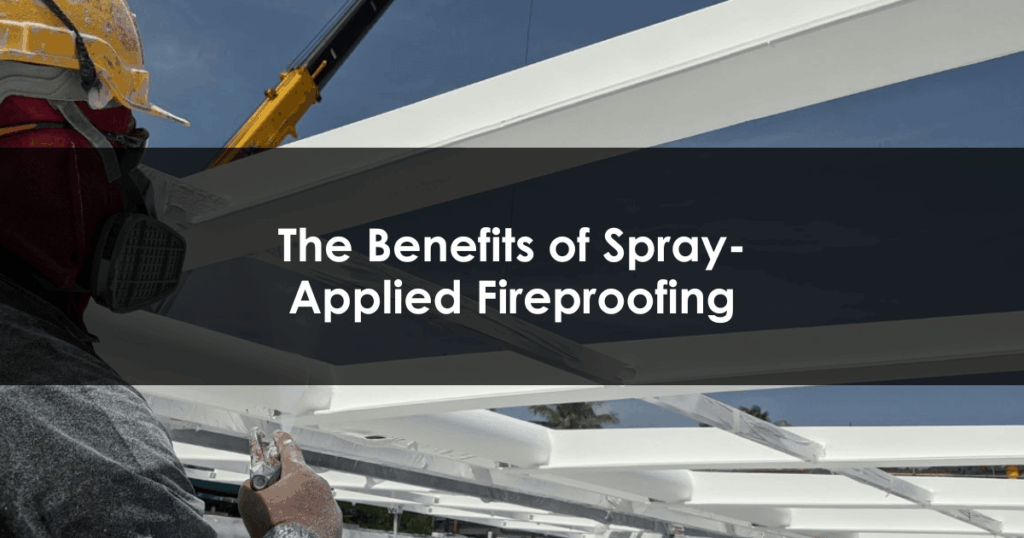
Spray-Applied Fireproofing, also called sprayed fireproofing or sprayed fire resistive materials (SFRM), can be a critical component of most commercial buildings’ fire protection systems. When applied to concrete or steel building elements, SFRM serves to reduce the rate of temperature increase in those materials during a fire. This feature is not just about asset protection; it is a time-tested strategy for safeguarding lives by slowing the effects of high heat on a building’s structural components.
Protection of Occupants
A core benefit of SFRM is the protection it offers to building occupants. By insulating the structural elements, spray-applied fireproofing delays the heat transfer that causes steel to lose its strength and concrete to break up. This delay ensures that the building structure maintains its integrity for longer, giving people inside more time to react and move to safety.
Preserving Structural Integrity
Intense heat can quickly compromise the load-bearing capacity of unprotected steel and concrete. By keeping the temperature of these foundational materials below critical thresholds, SFRM ensures the building remains stable and standing for the maximum possible duration in the event of a fire.
Minimizing Damage
Maintaining structural stability with spray-applied fireproofing also reduces the potential for the spread of fire and helps contain fire damage to specific areas. Fireproofing protection can mean significantly lower costs and less time required for post-fire cleanup, repairs, and reconstruction.
Essential Code Compliance & Fire Rating Achievement
For commercial and institutional construction projects, fireproofing is not optional; it’s often essential for code compliance. Most buildings, including hospitals, schools, apartments, and stores, are legally mandated to achieve specific fire ratings, and installing certified spray-applied fireproofing is a core technology used to achieve necessary fire ratings on a building’s elements. These ratings, which can vary based on the building’s size, location, and occupancy level, specify how long different components (including structural beams, walls, and ceilings) must resist a fire. Spray-applied fireproofing can be installed at customized thicknesses to provide the required fire rating for your building.
Versatility
The two primary types of spray-applied fireproofing include cementitious fireproofing, a mixture that hardens into an insulating foam-like texture, and intumescent paint, which expands in response to high heat. This material versatility allows contractors to select the best option based on the substrate, location, and required fire rating.
Aesthetic Options
Intumescent fireproofing provides design flexibility for projects where the structural steel is exposed or visible. When applied, intumescent paint looks like a normal coat of paint, but when exposed to heat, it swells rapidly to many times its original thickness and creates an insulating layer that protects the steel. This allows buildings to feature clean, exposed designs without sacrificing fire safety.
Spray-applied fireproofing is an essential component for the safety, compliance, and longevity of any modern structure.
Get started with the team of experts in spray-applied fireproofing and contact Nettles Construction Solutions today.