

What is Spray-Applied Fireproofing?
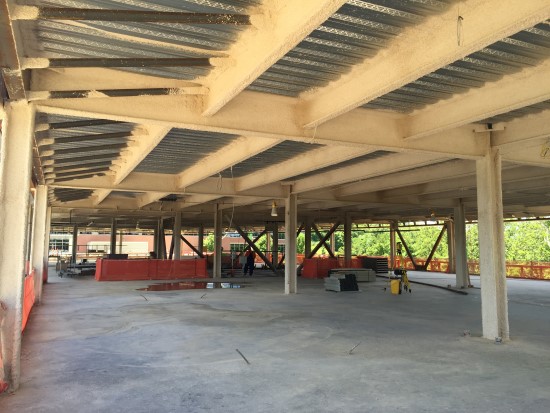
Spray applied fireproofing, also called sprayed fireproofing or sprayed fire resistive materials (SFRM), is a passive fire protection system that reduces the rate of temperature increase in concrete or steel during a fire, protecting occupants and prolonging the building’s structural integrity.
There are 2 types of spray applied fireproofing: cementitious fireproofing and intumescent paint. Cementitious fireproofing is a mix of either gypsum or portland cement that hardens into a foam-like texture with the insulating properties of cement. Intumescent fireproofing looks like a layer of paint when applied, but swells to many times its original thickness in fire situations, insulating and protecting structural steel members from the heat.
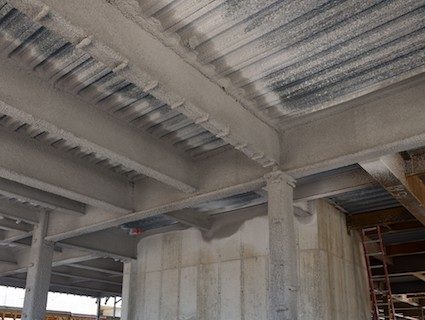
Cementitious vs. Intumescent Fireproofing
Commercial buildings typically use one of two systems to protect structural steel during a fire: cementitious fireproofing or intumescent fireproofing. Both are designed to slow the rate at which steel heats up so the structure can maintain its strength long enough for occupants to exit the building and emergency crews to respond.
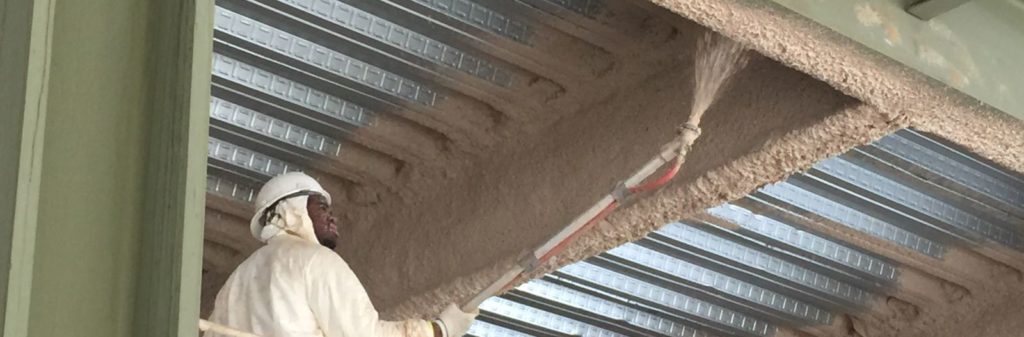
Cementitious Fireproofing
Cementitious fireproofing is the most commonly used system in commercial construction. It is a spray-applied material made from gypsum or cement-based compounds that form an insulating layer around structural steel. This system is often used in office buildings, hospitals, schools, and parking structures where the steel is concealed.
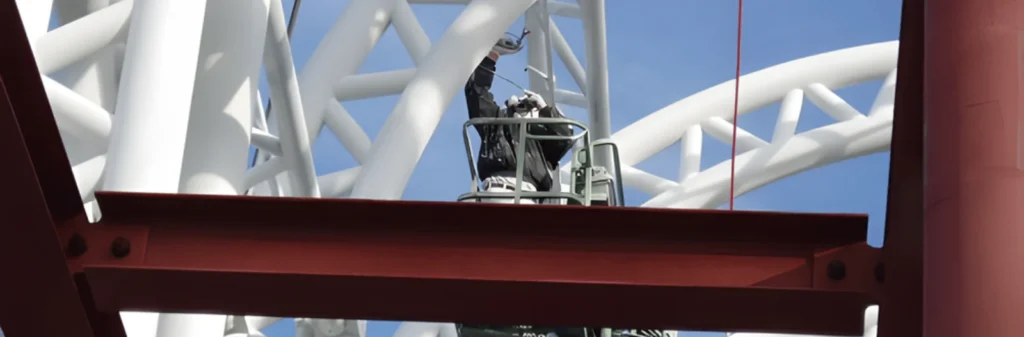
Intumescent Fireproofing
Intumescent fireproofing is a thin coating applied like paint. When exposed to high heat, it expands and forms a protective insulating char layer around the steel. It is typically used where structural steel remains visible as part of the architectural design.
Where Spray-Applied Fireproofing Is Used
Most commercial and residential buildings, including schools, hotels, apartments, hospitals, and stores, require specific fire ratings designed to ensure the safety of occupants and infrastructure. Fire ratings are governed by international standards such as the International Business Code, and can vary based on occupancy level, building size, and location.
Specific building elements may be subject to different fire ratings, including walls, doors, windows, ceilings, and structural components. Reference IBC tables 601 and 602 for the required fire ratings.
Fire Rating Requirements for Structural Steel
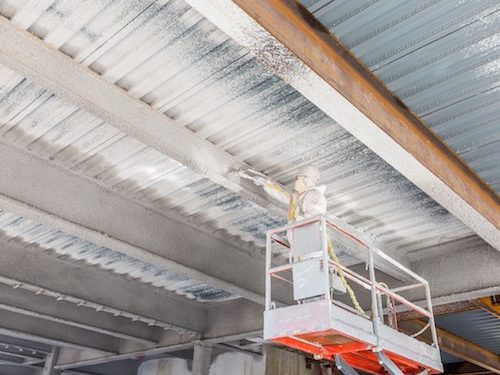
Advantages of Spray-Applied Fireproofing
Efficient installation on large steel structures
Spray application allows crews to cover beams, columns, and deck assemblies quickly, helping maintain construction schedules on large commercial projects.
Cost-effective fire protection
Compared with many other fire-resistance systems, spray-applied fireproofing is often one of the most economical ways to achieve required fire ratings for structural steel.
Adaptable to complex steel framing
The material can be applied around irregular shapes, connections, and dense structural framing where other fireproofing systems may be more difficult to install.
Supports multiple fire-resistance ratings
Application thickness can be adjusted to meet different fire-resistance ratings specified in UL designs or other approved fire-resistance assemblies.
How Spray-Applied Fireproofing Is Installed
Spray-applied fireproofing is installed after the structural steel frame is in place and inspected. The goal is to apply the material at the specified thickness so the steel members achieve the required fire-resistance rating defined in the project’s fireproofing assemblies.
The process includes the following steps:
- 01. Surface Preparation
Before application, our installers check that steel members are clean and free of oil, dirt, or debris so the fireproofing material can properly bond to the surface.
- 02. Material Mixing and Pumping
The fireproofing material is mixed on site and pumped through specialized spray equipment operated by our crew.
- 03. Spray Application
Our installers spray the material onto beams, columns, joists, and deck assemblies to achieve the required thickness for the specified fire rating.
- 04. Inspection and Thickness Verification
After installation, thickness, density, and adhesion may be inspected to confirm the fireproofing meets project specifications and testing standards.
- 05. Performance Assurance
Careful installation and inspection help ensure the fireproofing performs as intended and allows structural steel to maintain its load-bearing capacity during a fire.
Why Choose Nettles as Your Spray Applied Fireproofing Contractor?
At Nettles, we have years of experience with both cementitious and intumescent fireproofing. We mix the product on-site and spray it using specialized mixing and pumping equipment. Our pump operators and spray technicians are knowledgeable and certified–and we are proud members of the National Fireproofing Contractors Association.
Beyond our specific expertise, we pride ourselves on customer service, clear communication, and strict adherence to budgets and project timelines. We’ll work with you to ensure the safety of your building and the people in it.
Proud Member Of
Spray Applied Fireproofing FAQs
Have Additional Questions?
Our experts are ready to assist. Contact us today to discuss your project.
Does Nettles provide the materials?
Does Nettles offer turnkey fireproofing?
Under what conditions can you install spray applied fireproofing?
How much does spray applied fireproofing cost?
How long does it take to install spray applied fireproofing?
What is “patching” or “fireproof patching”?
How long does spray applied fireproofing take to dry?
Both cementitious and intumescent fireproofing take approximately 24 hours to completely harden after installation.
Do all roof deck systems require spray applied fireproofing?
No–lightweight insulating concrete roof deck systems have a built-in 1-hour fire rating, so may not require additional fireproofing.
What are thermal transmission barriers?
In addition to fireproofing, we can spray a cementitious material called Pyrocrete 239 over spray foam to provide thermal insulation.
Are there alternatives to spray applied fireproofing?
Fire board, a mineral wool with the appearance of insulation, can be installed in place of spray applied fireproofing to achieve the required fire ratings. It is a more expensive solution, but has aesthetic benefits and is easily paintable.
Want to Learn More?
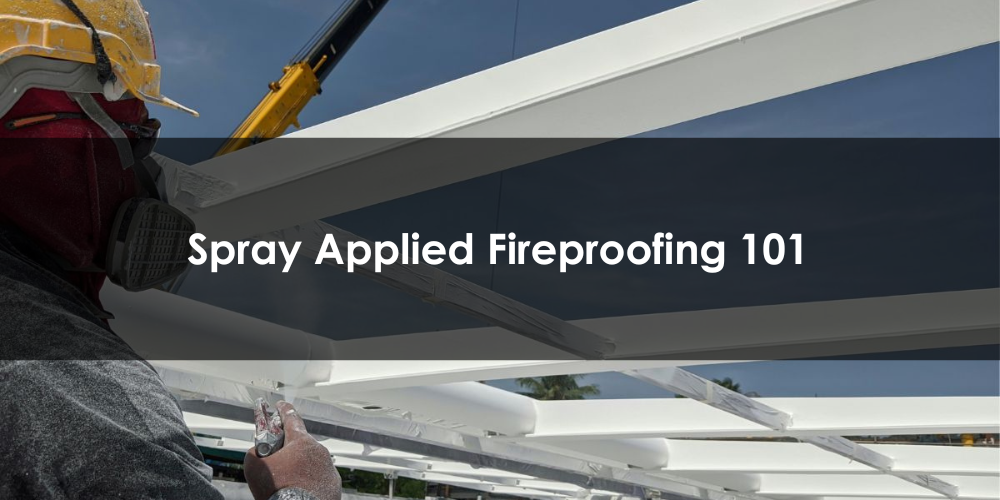
Read our comprehensive spray applied fireproofing buyer’s guide to learn about the advantages of each fireproofing type, how it’s installed, and what you should know before specifying.
Looking for Effective Noise Insulation?
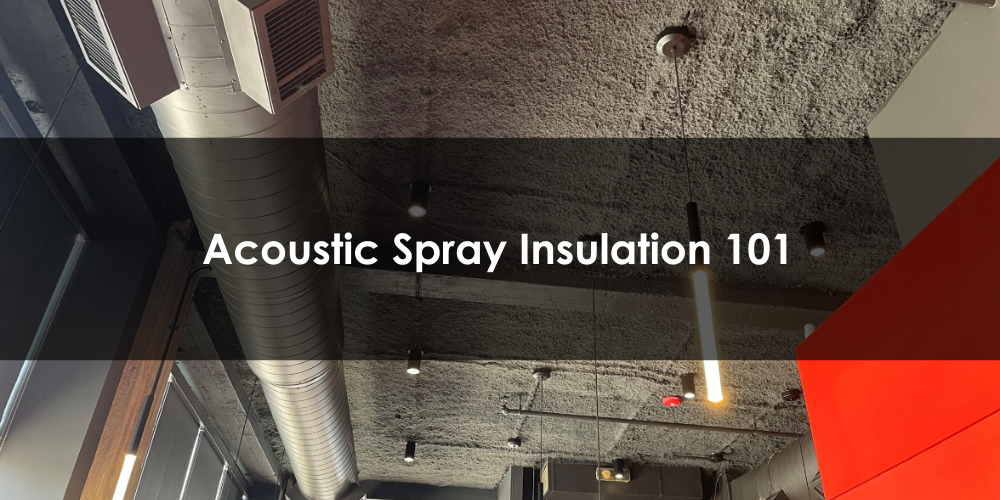
Nettles is a leading installer of CAFCO CELLU-SHIELD acoustical spray, which is ideal for applications such as restaurants, gymnasiums, theaters, and other spaces that require noise insulation. Available in both the Kansas City and Texas regions, our acoustic spray solutions can be combined with fireproofing to achieve high R-values and noise reduction coefficients.
What Our Customers Are Saying
We really appreciated Nettles’s customer service and flexibility. We look forward to working together again in the future.
- Jeff Birkhead | Chief Estimator and Project Manager, Patin Construction
Companies We Work With






Speak With An Expert

Sasa Scherzer
281.995.1575
sasa.scherzer@nettlescs.com

Bryan Batchman
979.451.8600
bryan.batchman@nettlescs.com
Have Questions or Ready to Get Started?
Fill out your information and one of our experts will reach out to you about your project
"*" indicates required fields