
The lifespan of a commercial roof is typically 20-30 years, but in regions that often experience severe weather or significant wear and tear, building owners may need to replace their roofs more frequently. To maximize the financial potential of their roofing system investment, owners need to think strategically about the long-term costs of their roof, including factors like repair and the reroofing process. If it’s time to reroof your structure, a lightweight insulating concrete (LWIC) roof deck system is one of the fastest, easiest, and most cost-effective choices compared to traditional tapered insulation systems.
In this article, the Nettles Construction Solutions roof system experts explain how building owners can save time and money throughout the lifespan of their building by reroofing their tapered insulation systems with LWIC roof deck systems.
No Tear-Off Reroofing
The reroofing process with traditional insulation board systems can be costly, time-intensive, and damaging to the environment. Usually, a total tear-off is required since the boards have lost their strength and insulation R-value by the time a reroof is needed. There are a variety of disadvantages to total roof tear-off:
- Risks damage to the building’s interior
- Likely to disrupt business operations
- Creates excess debris and roofing waste
- More to clean up
- Higher environmental impact (high-waste, high-energy cost, labor-intensive)
Installed Over the Old Roof
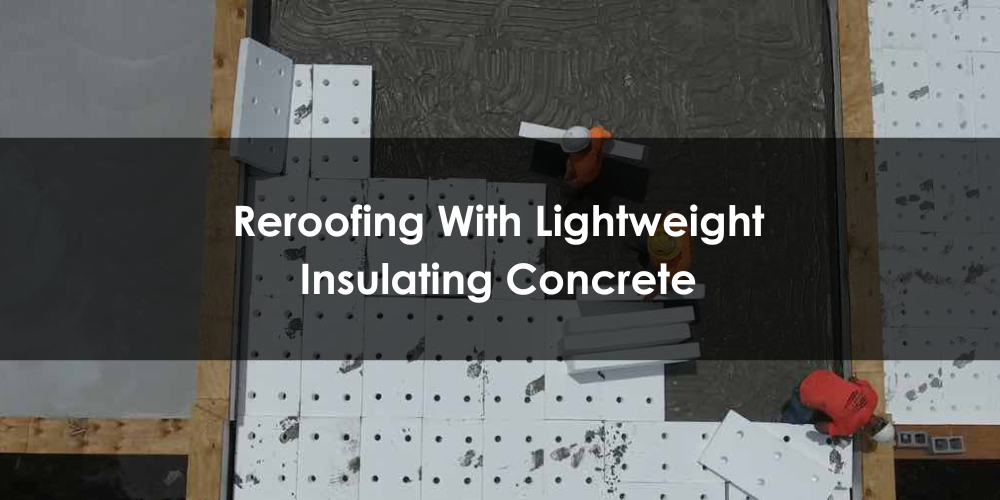
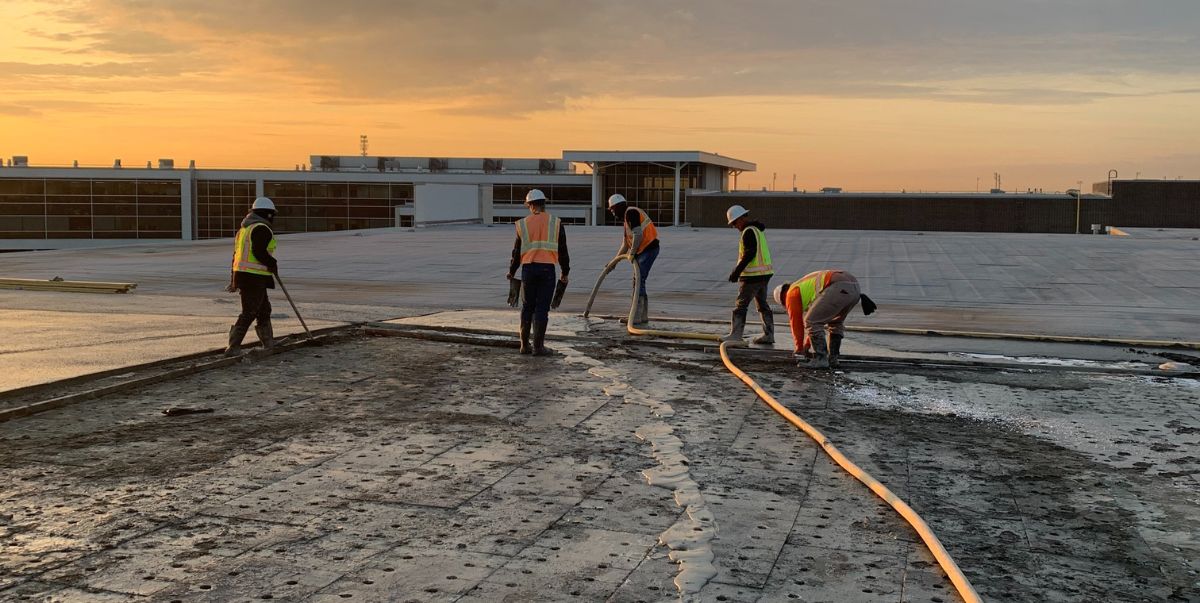
In most cases, LWIC roof deck systems can be installed by casting the concrete directly over an existing membrane and insulation system. Then, in another few decades, when it’s time to reroof again, only the membrane needs to be replaced. The insulation in LWIC roof deck systems is embedded in a layer of concrete, meaning roofers do not have to tear it out along with the finish membrane during reroofing. This process saves significant time, money, and labor, and reduces waste and the cost associated with insulation removal.
Cost Savings Of LWIC Roof Deck Systems
LWIC roof decks are cost-effective in many ways. They are monolithic systems, unlike tapered insulation systems, which require multiple layers of board to create a slope. LWIC roof deck systems typically save $2-4 per square foot during initial installation. This type of roof deck also has built-in fireproofing properties, which helps to save owners the cost of installing additional roof fireproofing.
However, LWIC roof decks save building owners even more money over time. Since they are less likely to be destroyed in high-wind environments, there is less risk of damage from extreme weather. The monolithic concrete structure acts as an air retardant and provides excellent wind uplift performance. Another significant, long-term advantage of LWIC roof deck systems is the excellent R-values provided, which contribute to optimal thermal efficiency of the roof and your building, leading to reduced building energy costs throughout the life of the roof.
Time Savings Of LWIC Roof Deck Systems
When it comes to roofing projects, general contractors and construction managers need the installation to stay on schedule without costly delays. The installation process for LWIC roof decks is significantly faster than traditional tapered ISO systems, which streamlines construction schedules and reduces labor costs. The lightweight concrete used in this type of roof deck requires minimal setting time, and the roofing membrane can be applied as soon as 48 hours after the initial pour, greatly reducing the time spent on roof installation.
LWIC Roof Decks Are Versatile
Lightweight Insulating Concrete can be poured over a variety of roofing substrates, including concrete, wood, or steel decking. Additionally, the overall roof deck system offers versatility in roofing membranes that can be installed on top of it. Built-up roofing, modified bitumen, and a wide range of single-ply membrane compositions can be installed over LWIC roof decks. The versatility of lightweight insulating concrete ensures compatibility with a wider range of building types and construction requirements than other types of roof deck, while also improving the overall durability and sustainability of the roof system.
Want To Learn More?
If you have questions about LWIC roof deck systems or reroofing your building with a LWIC roof deck system, our experts are happy to help. Contact us today!